
Why Do Greyhounds Roach?
Why Is It Called Roaching?
Why Do Greyhounds Roach?
Comfort
Temperature Regulation
Stretching and Flexibility
Sleeping Position
Relaxation
Playfulness
Submission
Attention-Seeking
Personality and Individual Variation
Sighthound Breed Trait
Relief from Pressure Points
Do All Dog Breeds Roach?
Should I Worry If My Greyhound Doesn’t Roach?
Can I Touch My Greyhound’s Belly Whilst It Is Roaching?
Conclusion
Why Is It Called Roaching?
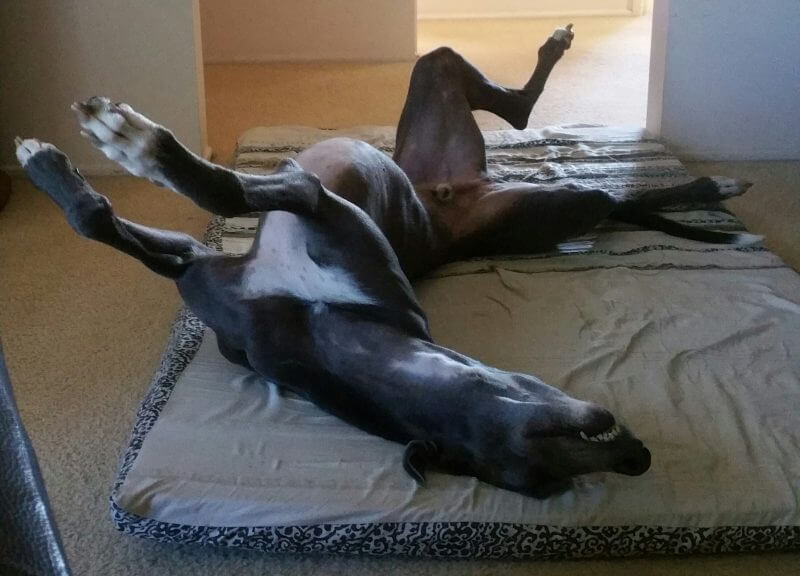
Roaching is the term that is used to describe a specific posture that some greyhounds and other sighthounds adopt when they lie on their backs with their legs sticking up in the air (reminiscent of a dying cockroach). There are two different types of roaching, one is where they are just lying on their back relaxing or cooling off, and the other involves your greyhound lying on its back writhing around. It can look quite unusual but there are several reasons why greyhounds and sighthounds, in particular, engage in the roaching behaviour.
Why Do Greyhounds Roach?
The reasons that a greyhound or sighthound may engage in the roaching behaviour are:
Comfort: The roaching position is comfortable for greyhounds. It allows them to stretch out, relax, and distribute their weight evenly. This is particularly soothing after physical activity or exercise.
Temperature Regulation: Roaching helps the greyhound to regulate their body temperature. By lying on their backs their belly, which is less insulated, is exposed to cooler air, allowing them to dissipate excess heat in warm weather. Greyhounds have less hair on their stomachs, their blood vessels are very close to the skin’s surface and it’s where their major organs are located, by cooling this part of their body it fundamentally cools the blood that will then run to the rest of their body. Conversely, Greyhounds will do the opposite of this when they are feeling cold, and will curl up in a ball or like a pretzel to recycle and retain their body heat.
Stretching and Flexibility: Greyhounds are naturally flexible dogs. Roaching allows them to stretch their muscles and limbs. This position helps maintain their flexibility and range of motion.
Sleeping Position: It is common for greyhounds to roach while sleeping because it is comfortable and restful. Greyhounds tend to change sleeping positions during their sleep cycle, and roaching can be one of those positions.
Relaxation: Roaching is usually a good indicator that your greyhound is relaxed and content. Greyhounds that feel safe and secure in their environment and company are more likely to engage in this posture. In the wild exposing their bellies like this leaves them in a vulnerable position.
Playfulness: Some greyhounds are known to roach as a playful expression. They may do it during playtime or when they are feeling particularly joyful and carefree.
Submission: In a social context, greyhounds may roach as a sign of submission to other dogs or humans. It is a vulnerable position, indicating that they mean no harm and want to maintain peace. The position is also a carryover from their puppyhood, when they would wrestle with their siblings and during this process, they would use their legs as a play fighting tool.
Attention-Seeking: Roaching is sometimes used by greyhounds to get the attention and affection of their owners. If your greyhound gets rewarded with pats or treats when they roach, they may do it more often to seek your attention.
Personality and Individual Variation: Each dog is unique, and they all have their own personalities and quirks. Some greyhounds may simply enjoy roaching because it is part of their nature.
Sighthound Breed Trait: Greyhounds, Whippets and Italian Greyhounds are more commonly associated with roaching.
Relief from Pressure Points: Lying on their back can relieve pressure on certain joints or pressure points of your greyhound. This can provide temporary relief from discomfort or stiffness. With greyhounds having low body fat, the nerves in their back and spines sit closer to the surface so this ‘roach scratch’ puts them in a sense of complete ecstasy. Whilst seeking relief from pressure points your greyhound may writhe around and make growling or groan sounds as they find that spot they were trying to reach.
Do All Dog Breeds Roach?
It is not just greyhounds who roach, but it is usually just sighthounds such as whippets, Salukis, Afghan hounds and greyhounds who roach. Smaller dogs and dogs who have a different body shape to sighthounds are rarely seen to roach.
Should I Worry If My Greyhound Doesn’t Roach?
Not all greyhounds like to roach, we have two greyhounds who are siblings and only one likes to roach the other is more reserved but still appears to be just as content and comfortable living with us. It may take a retired greyhound longer to feel comfortable in your home so it may take them longer to start their roaching habit if they ever will. This is due to it taking some time for them to get used to their new living arrangements in your house and them previously being housed in a kennel and not having the opportunity to roach as much as they can now.
Can I Touch My Greyhound’s Belly Whilst It Is Roaching?
Just because your greyhound is exposing its belly whilst roaching it does not mean that it is an invitation to start patting its belly. Your greyhound may startle awake, growl, or snap if you start patting its belly. It is also best to make your presence known when approaching a roaching greyhound just so you don’t startle them. This is due to them usually making some noise whilst roaching and stopping them from being startled by your presence. Once your greyhound becomes more comfortable with you and their surroundings, they may let you pat their belly whilst they are roaching, it is worth the wait as the fur on their belly tends to be softer and less coarse than the hair on their back.
Conclusion
While roaching is usually harmless and quite often a sign that your greyhound is happy, relaxed, and content with you, it is important to pay attention to your greyhound’s overall behaviour and well-being. If your greyhound starts roaching excessively or displays other unusual behaviours, it may be a sign of discomfort or an underlying health issue. In such cases, it would be worth checking in with your veterinarian to rule out any potential concerns. If you do have a greyhound that doesn’t roach, don’t be concerned, it does not mean that your greyhound does not feel comfortable or safe with you in your home.